Use progressive overload prompts
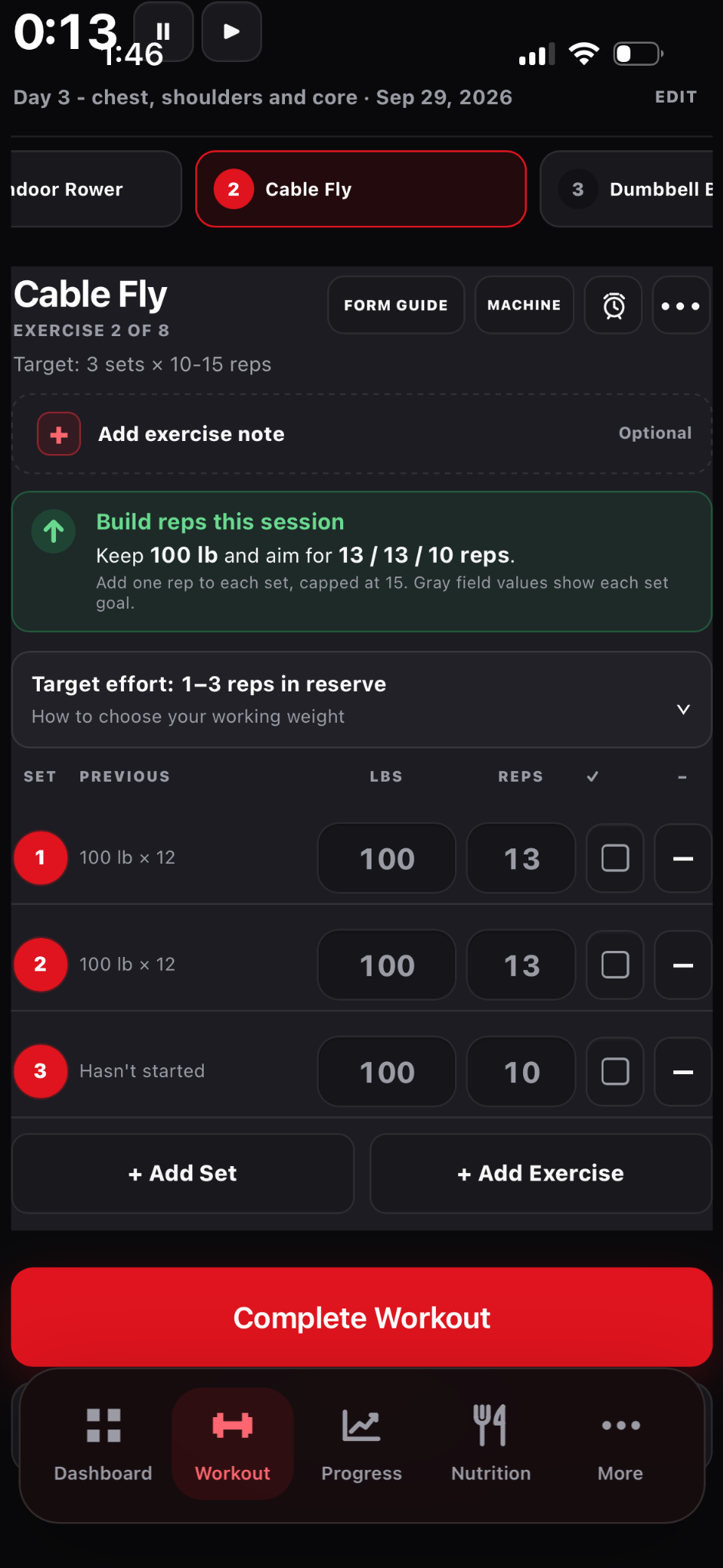
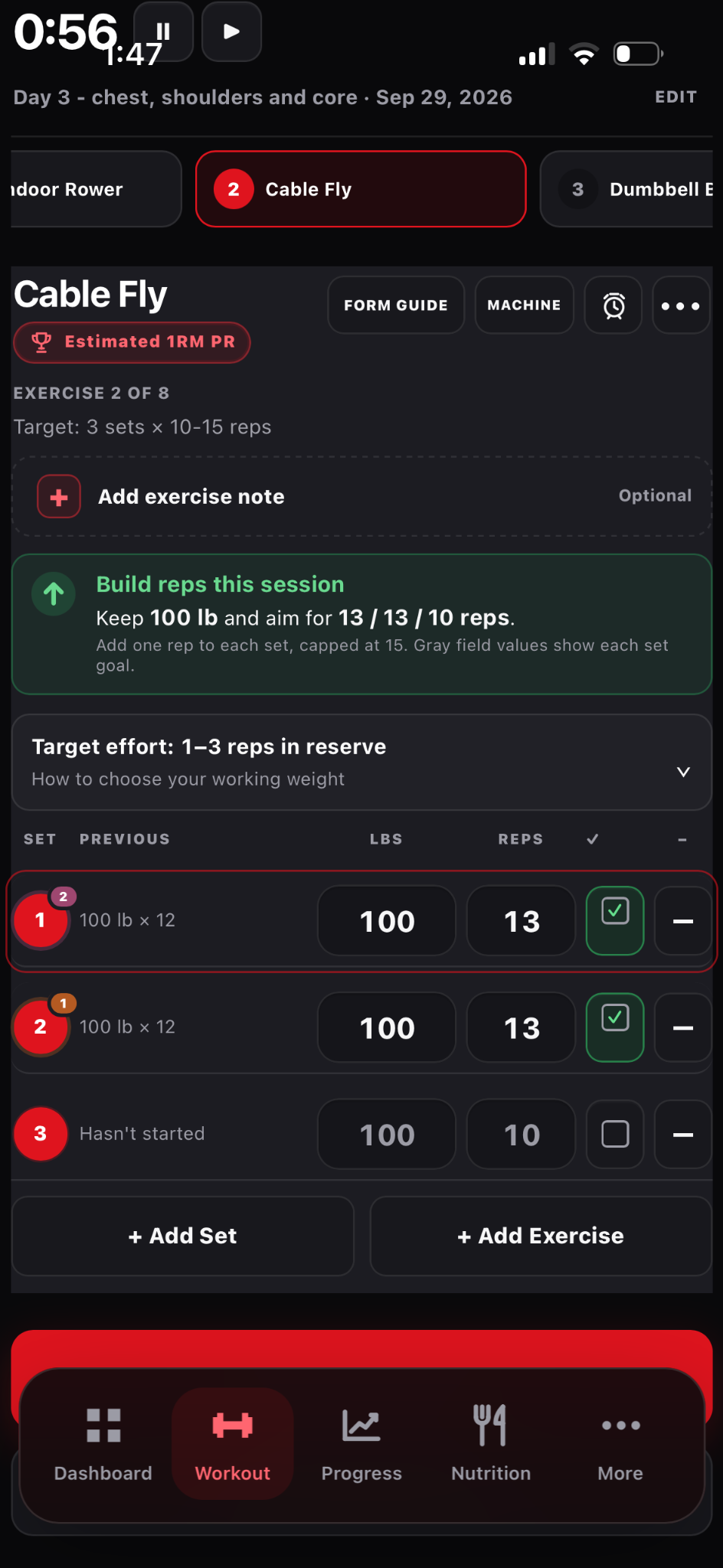
The app compares a lift with your prior completed sets.
How to use it
- Use the same exercise and record full working sets across sessions.
- Add clean reps within the prescribed range before increasing load.
- Review the next-session suggestion in the workout logger.
- If technique or recovery suffers, hold the load steady and adjust the session.
See it in Level Up
What the evidence means
Progressive overload means increasing the training challenge over time. A prompt is guidance, not a guarantee that every session should be heavier.
Research and further reading
- ACSM resistance training progression position stand ↗
- Proximity to failure and hypertrophy meta-regression ↗
How the prompt makes a suggestion
Level Up reads the prescribed rep range and completed working sets from the previous comparable session. For a typical 8–12 range, the first goal is to keep the same load while increasing clean reps toward 12. When all completed working sets reach the upper end, the app can suggest a heavier load next time and targets the lower end of the range again.
Practical load increments are currently 5 lb for dumbbell, barbell and machine exercises, and 2.5 lb for cable exercises. The prompt calculates a range of increases rounded to available increments, with an upper bound based on about 11% of the current load. If most sets fell below the rep range, it may instead suggest dropping one increment to get back into range.
How RIR changes the recommendation
RIR means reps in reserve: how many more good repetitions you judge you could have completed. If multiple sets were recorded at 0 RIR, Level Up prompts you to repeat the load and aim for about 1–3 RIR rather than keep escalating. If only the final set reached 0 RIR, it presents progress more conservatively. RIR is self-reported and can be imprecise; it is context for a suggestion, not a laboratory measurement.
For bodyweight movements, the prompt can add one rep to sets still below the upper range and preserve the higher rep target on other sets. When bodyweight sets reach the top, added resistance or more reps can be offered where the exercise supports that choice.
Sources
- ACSM position stand on resistance training progression.
- Robinson et al. — proximity to failure and strength or hypertrophy outcomes.
- Schoenfeld et al. — weekly resistance training volume and muscle growth.
The app’s specific increment and RIR prompt thresholds are product rules; the cited literature informs the broader training principles.